
Why Are Some Trees Painted White?
The truth is, those white tree trunks are not decoration. They’re a warning, a shield, and a silent plea for survival. While orange and purple marks shout about ownership and death, white speaks softly of protection. Beneath that pale coat lies a battle against invisible winter wounds, cracked bark, and slow, silent suffering
Those white bands on tree trunks are a careful act of protection, not a random aesthetic choice. In winter, sunlight can heat one side of a tree’s bark, then freezing night temperatures slam it back down. This sudden expansion and contraction can split the bark open, a condition called sunscald, leaving the tree vulnerable to disease, decay, and long-term weakness. Painting trunks white with diluted water-based latex paint helps reflect the sun’s rays, keeping temperatures more stable and reducing this stress.
Applied once a year, usually with a brush or sprayer, the thin white layer becomes a kind of seasonal armor. It won’t save a tree from every threat, but it quietly prevents a common, painful injury most of us never see. So when you pass a row of trees wearing white in the cold months, you’re looking at deliberate care: a small human intervention that lets them face another winter and leaf out strong in spring.
Related Post

A deadly shooting erupted in the parking lot of…See more 👇
Mourners came to remember the dead. Instead, they ran for their lives. Outside a Salt [...]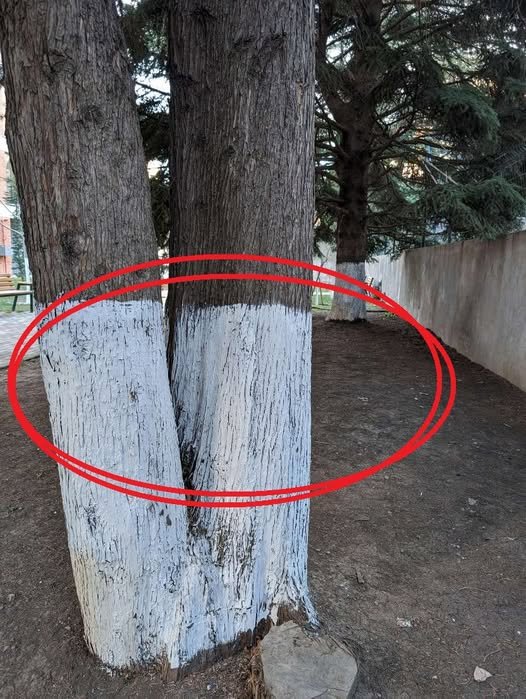
What’s the Reason Behind Painting Trees White?
Painted Trunks, Protected Trees Some tree trunks stand out with a pale, painted look, hinting [...]